ARCO GalleryWalks
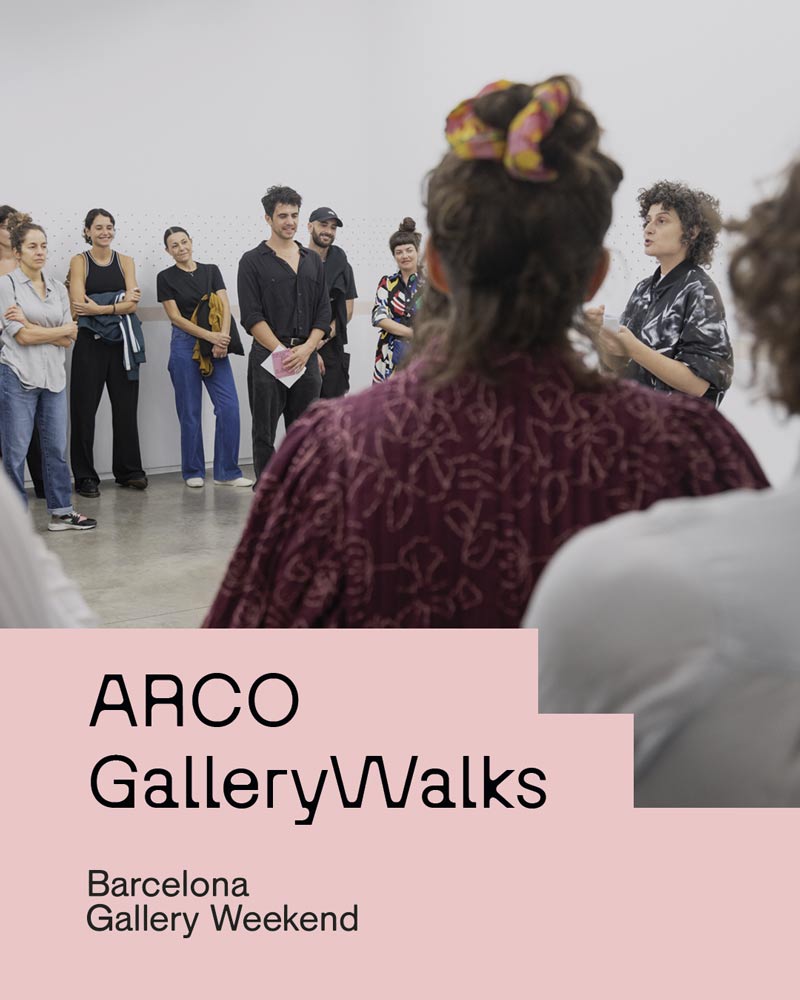
With the collaboration of Fundación ARCO, Barcelona Gallery Weekend offers guided tours to the participating galleries led by professionals from the local context. These walks will provide a first-hand insight into the work of the galleries and their artists, bringing the public closer to current artistic creation.
The 16 itineraries will take place on 20th and 26th September, and at the end of each route we will share a vermouth courtesy of BCNMUT.
In Catalan / Spanish. Limited capacity.
Previous registration required HERE.
Sunday, September 20:
11:00 AM: L'Hospitalet: Galería Alegría, ethall.
11:00 AM: From Gràcia to Trafalgar: House of Chappaz, RocioSantaCruz, Sorondo Projects.
11:00 AM: Trafalgar — Poblenou: Fuga, Al-Tiba9, Palmadotze (pop-up at FoodCultura)
11:00 AM: Passatge Mercader — Mallorca: ProjecteSD, Zielinsky, Galeria Marc Domènech, ADN Galeria.
11:30 AM: Sant Antoni — Ciutat Vella: Chiquita Room, àngels barcelona, Sala Parés.
12:30 PM: Trafalgar 1: Pigment Gallery, Dilalica, Bombon Projects, Escat Gallery.
01:00 PM: Trafalgar 2: Suburbia Contemporary, 3 Punts Galeria, Prats Nogueras Blanchard.
01:00 PM: Poblenou — Trafalgar: Palmadotze (pop-up at FoodCultura), Al-Tiba9, Fuga.
01:00 PM: Eixample: Victor Lope Arte Contemporáneo, SELTZ by Ritter Ferrer, Mayoral.
Saturday, September 26:
11:00 AM: Sant Antoni — Ciutat Vella: Chiquita Room, àngels barcelona, Sala Parés.
11:00 AM: Eixample: Mayoral, SELTZ by Ritter Ferrer, Victor Lope Arte Contemporáneo.
11:00 AM: Mallorca — Passatge Mercader: ADN Galeria, Zielinsky.
11:00 AM: Trafalgar 1: Bombon Projects, Dilalica, Escat Gallery, Pigment Gallery.
11:00 AM: De Gran Via a Trafalgar: RocioSantaCruz, Sorondo Projects, Suburbia Contemporary, Prats Nogueras Blanchard.
11:30 AM: L'Hospitalet: ethall, Galería Alegría.
*Photo: àngels barcelona, BGW 2024. Rafael Arocha
Itineraries
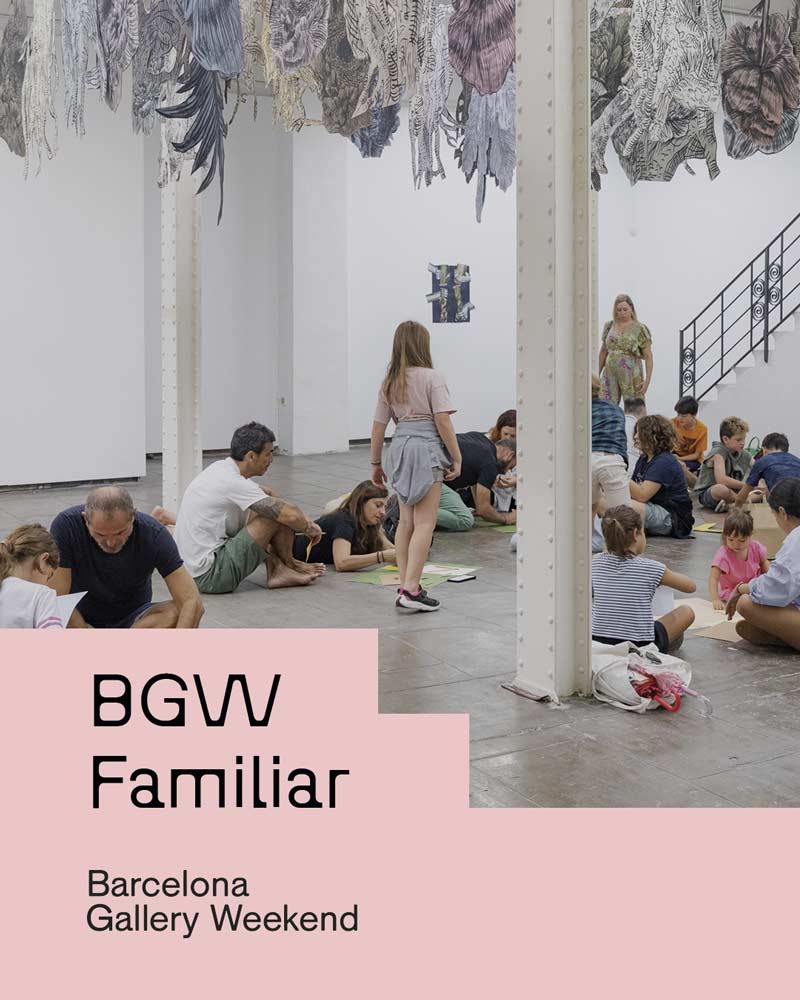
BGW Familiar
Visits for families with children to a selection of exhibitions of Barcelona Gallery Weekend 2026 programme.
Curator Alexandra Laudo [Heroínas de la Cultura] will lead the participants to reflect on what they see through questions, games and other proposals.
Sunday, 20th September, 11:30 — 12:15h
Sala Parés
Guillermo Pérez Villalta: Cuadros de compañía: 2025 — 2026
Sunday, 20th September, 13:00 — 13:45h
Escat Gallery
Federica Furbelli: Las nubes no tienen casa
Saturday, 26th September, 12:30 — 13:15h
ethall
Eulàlia Rovira: Clin.
Recommended age: from 6
In Catalan / Spanish.
Free access with previous registration (limited capacity): bgw@artbarcelona.es
*Photo: BGW Familiar at Palmadotze during BGW2025. Cecilia Díaz Betz.
Cop de cor
Voices from the art world share the exhibitions they won't miss this BGW —the ones that captured their hearts at first sight.
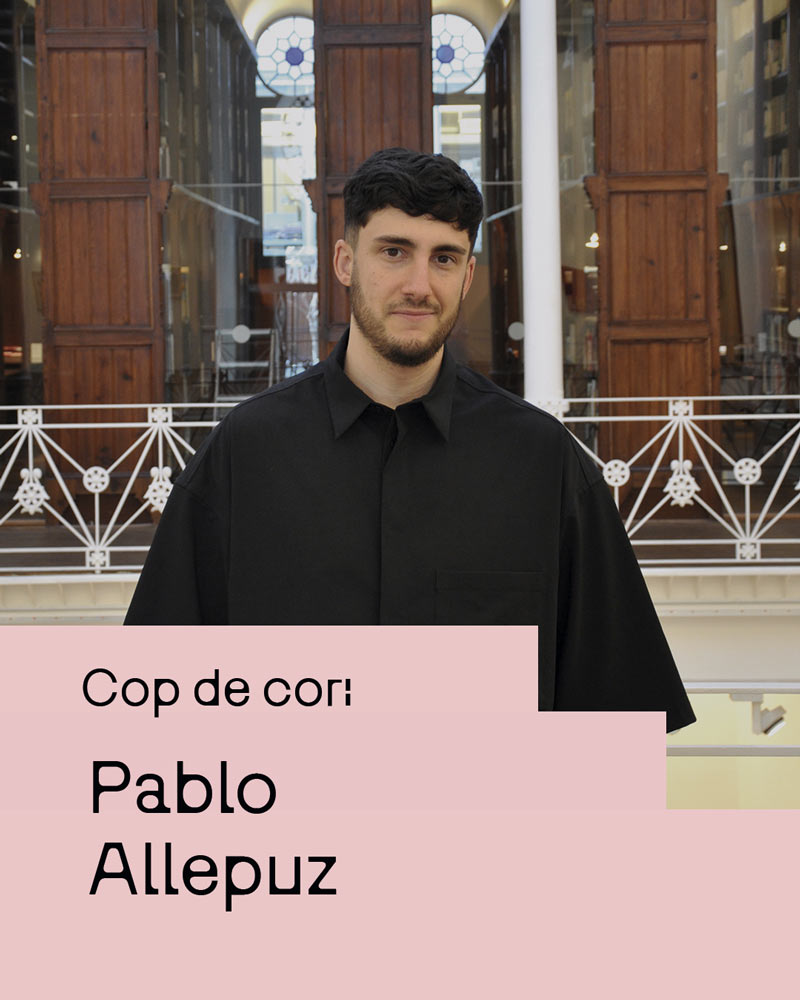
Cop de cor: Pablo Allepuz, Head of Collection at Museu Tàpies
I think it’s a real privilege to have two projects such as ‘Permanent Present’, curated by Vicenç Altaió for Mayoral, and ‘Front for Emancipation and Collective Delirium (FEDC)’, curated by Gabriel Ventura for FUGA, presented in galleries across the city. Coming from different generations, I imagine both proposals combine history, archives, fiction, art, and counterculture in unprecedented ways. However, respective approaches to the idea of a group exhibition will surely produce very different results. Thanks for supporting this kind of curatorial endeavour.
I always keep an eye on everything ProjecteSD presents. On this occasion, I’m particularly interested in the gallery’s double exhibition fomat featuring Ana Jotta and Allen Ruppersberg, a pairing that will further challenge notions already present in both artists’ practices —authorship, originality, and collecting— through their engagement with popular culture. I’m especially curious to see how Jotta’s new mural will frame and reinterpret the works selected for ‘O Jogo da Glória (The Game of the Goose)’.
I don’t think anyone should miss ‘Karim Rosa’, Lucía C. Pino’s first solo exhibition at Prats Nogueras Blanchard, or the solo exhibitions by Sergio Prego (‘Overflow’) and Eulàlia Rovira (‘Clin.’) at ethall. Three artists separated by eight years, three different moments in their careers, three of the most powerful practices currently exploring the material possibilities of sculpture in relation to the exhibition space.
Among the activations in the Flash programme, I’m especially looking forward to the dialogue proposed by àngels barcelona between ‘Theory of Fire’ by Lúa Coderch and ‘Anima Mundi’ by Eulàlia Valldosera. Two complementary reflections on light —or illumination— developed through words, drawing and video.
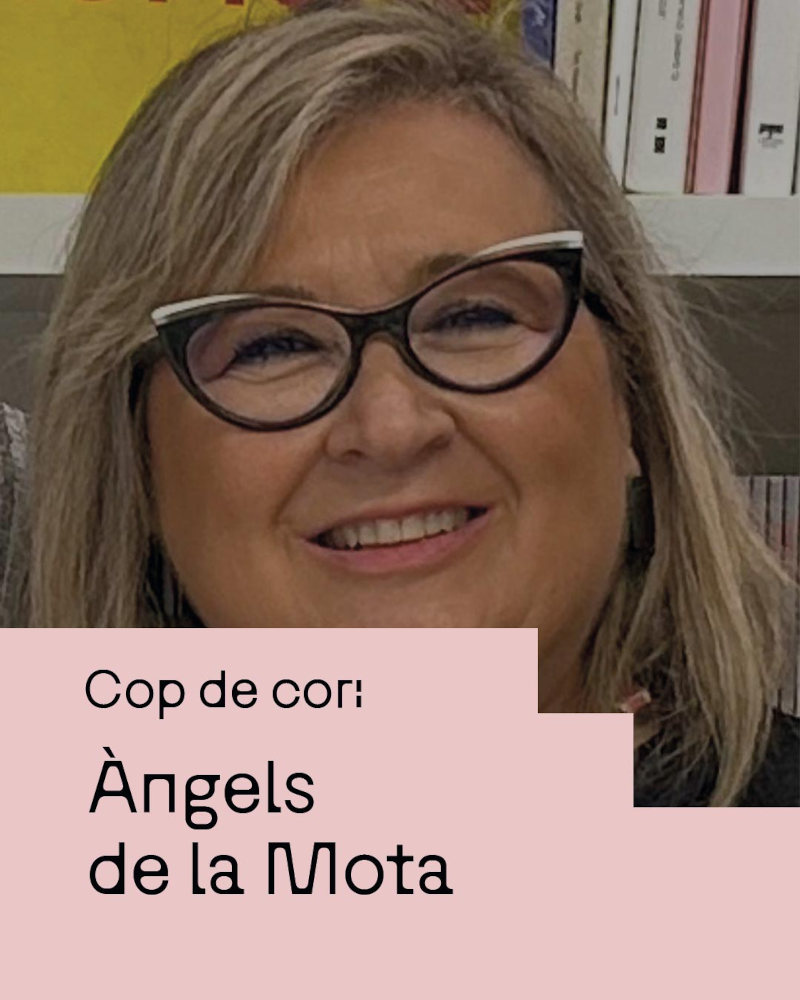
Cop de cor: Àngels de la Mota, former gallerist and currently art advisor
I’ll probably begin my Barcelona Gallery Weekend tour on Passatge Mercader, one of Barcelona’s most beautiful streets and, fortunately, still relatively unknown. It’s a place where you can enjoy art, drink the city’s best Negroni, or have a delicious and wholesome meal, all within just a few meters; a luxury I enjoyed for almost thirty years and miss dearly.
Right there, at ProjecteSD, is an excellent exhibition by Allen Ruppersberg (Cleveland, 1944), one of the finest American artists of his generation and also one of my all-time favorite artists, so it’s an essential stop. But that’s not all: we must explore the other galleries along the passage, especially Marc Domènech, whose programme consistently offers a highly personal perspective on twentieth-century art. And it was precisely while walking along this stretch that I noticed a rather curious coincidence: several galleries are opening the new season with exhibitions by major historical figures of Conceptual Art and, as it happens, they were all born in the 1940s. Curious, isn’t it?
This generational thread continues at the next stop on the route: Seltz gallery, on the corner of Balmes and Consell de Cent, with an exhibition by Francesc Torres (Barcelona, 1948), 'The Future Is Not What It Used to Be', one that is unlikely to disappoint. And, in the same spirit of rediscovering major figures of Conceptual Art in unexpected settings, another unmissable stop will be 'Open Archive', a visit to Antoni Miralda’s (Terrassa, 1942) studio, organized by Palmadotze as part of the Flash programme: a unique opportunity, available only during that weekend, to step inside a legendary space where Miralda has created a significant part of his body of work.
Continuing with the Flash programme, Chiquita Room presents, for the first time in Barcelona, another major historial figure of Conceptual Art: the Dutch artist Pieter Laurens Mol (Breda, 1946). It is a compelling preview of the gallery’s new chapter, which will open a new space in Brussels in a few days.
This is where my historical and sentimental journey through Barcelona’s galleries comes to an end. But I certainly won’t overlook many other equally unmissable exhibitions: àngels barcelona — 'Anima Mundi' by Eulàlia Valldosera; Prats Nogueras Blanchard — 'Karim Rosa' by Lucía C. Pino; Bombon Projects — Mounira Al Solh; Fuga — 'Front for Emancipation and Collective Delirium (FEDC)' by Gabriel Ventura; RocioSantaCruz — Mariaelena Roqué / Flash: Antonio Saura; Chiquita Room — 'Lo que tiene vuelo' by Laía Argüelles; House of Chappaz — 'Front Running y Trampa' by Momu & No Es; in L’Hospitalet, Galería Alegría — Jacobo Castellano & Luis Bisbe; ethall — Sergio Prego / Eulàlia Rovira / Flash: Juande Jarillo & Martín Vitaliti.
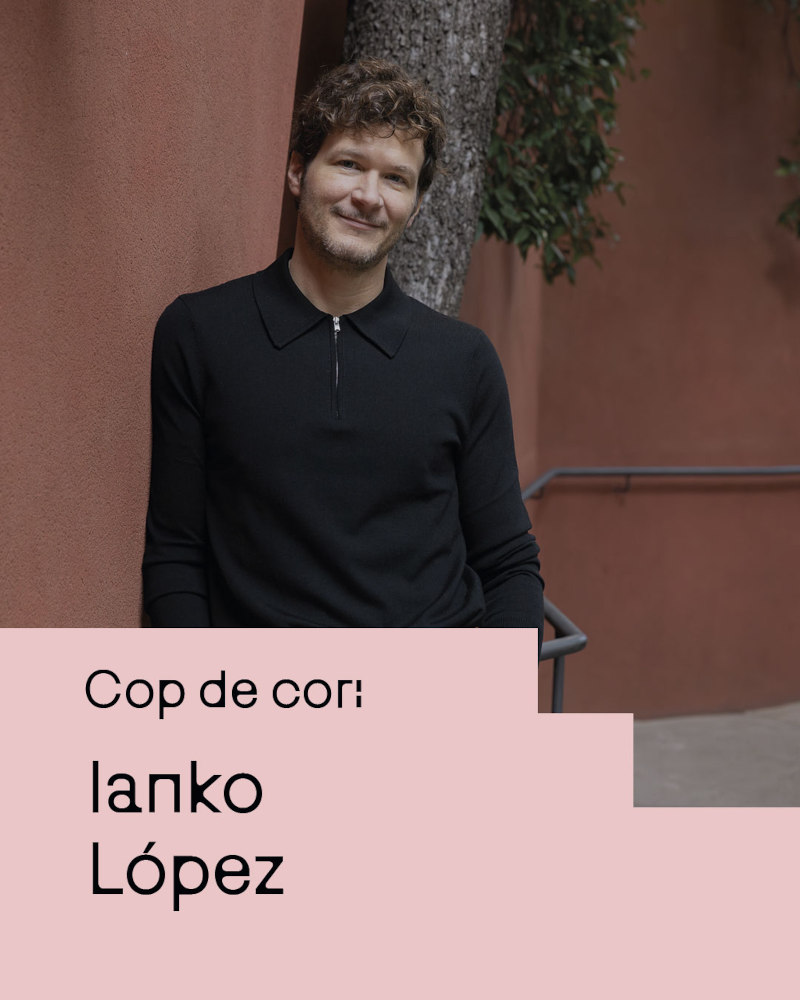
Cop de cor: Ianko López, cultural manager and journalist
Eulàlia Valldosera at àngels barcelona: Valldosera is an artist whose work fascinated me most when, as a teenager and before I had even studied Art History, I first became interested in contemporary creation. I then lost track of her work for many years, so the prospect of seeing a solo exhibition by her in a gallery now fills me with a genuine sense of excitement —one I’m frankly very grateful to feel.
Mounira Al Solh at Bombon Projects: I first discovered this Lebanese artist thanks to Ana Ramírez from Bombon Projects. As I looked more deeply into her practice, I was immediately drawn to her work. I’m very eager to see this exhibition, which is based on what I imagine are the traumatic memories of her childhood during the Lebanese Civil War.
Sergio Prego at ethall: Simply because Prego is one of my favorite contemporary Spanish artists. I’m always excited to see what he’s been working on. There’s really not much more to add.
Lucía C. Pino at Prats Nogueras Blanchard: For similar reasons, everything I’ve seen by Lucía C. Pino has captivated and challenged me, so I’m very interested to see how she continues her exploration of the material and the immaterial dimensions of memory and desire.
Francesc Torres at SELTZ: I was surprised by this gallery-artist pairing, which already feels like a promising start. I greatly appreciate Torre’s corrosive sense of humor and his inventive visual language, so I suspect I’ll find this new exhibition especially compelling.
Jacobo Castellano and Luis Bisbe at Galería Alegría: I’m curious to see how the encounter between these two artists will unfold in a gallery that, if I remember correctly, previously brought together Bisbe and Alberto Peral in a dialogue a few years ago. That exhibition produced a highly stimulating result, so I’m looking forward to seeing what emerges this time.
Photo: Leafhopper for Dart, 2025.
Cop de cor: Pilar Ortega
This route brings together seven gallery proposals that range from historical memory and feminist activism to political irony and food rituals. These spaces invite us to rediscover the value of archives, the power of everyday objects, the ability of art to connect different eras, the significance of rituals, and the importance of building community, while encouraging critical thinking.
RocioSantaCruz
Rocío Santa Cruz mantains her commitment to exchange and dialogue in her exhibitions, recovering the silenced voices of essential figures. On this occasion, she establishes an enriching correspondence between a reassessment of a key figure in contemporary feminist art and the provocative graphic language of the post-war avant-garde, bringing them together in a powerful critical discourse: the use of corporeality and iconoclasm to challenge social and gender norms.
The voice of contemporary feminist art is represented here by Mariaelena Roqué in ‘UnaDonaUna · AutoRetratRetratat’, an unclassificable creator whose strength lies in an interdisciplinary practice operating at the intersection of the visual arts, sculpture, performance and live action. In her work, the female body becomes a territory of memory, identity and transformation, serving as the principal material and political foundation of her practice and inviting us to rethink identity.
As part of the Flash Programme, the gallery presents the artist’s book ‘L’odeur de la sainteté’ by Antonio Saura, with texts by Fernando Arrabal and published in Paris in 1975. This graphic work is based on Yves Rivière’s collection of anticlerical erotic photographs.
ProjecteSD
ProjecteSD’s proposal is particularly significant, presenting the bold formal dialogue of ‘O Jogo da Glória (The Game of the Goose)’, grounded in a gesture of spatial intervention. Artist Ana Jotta will create a mural drawing conceived specifically for the exhibition, which will not only function as an autonomous work within the space but also become the support for a sophisticated dialogue between works from her own practice and those of her American contemporary Allen Ruppersberg.
Both artists share an interest in collecting and re-signifying found materials drawn from popular culture, employing strategies of recomposition, assemblage and collage, together with written language and the printed word as recurring elements in both their practices. The exhibition embraces an open-ended discursive approach, free from predetermined certainties yet grounded in a conceptual framework. It reflects on the encounter between two independent methodologies while critically confronting their respective poetics.
Chiquita Room
Chiquita Room brings together art and poetry, alongside a critical perspective, in a proposal that addresses the passage of time and the traces of memory. It revisits Mol’s poetic language and Argüelles’ freshness of discourse, establishing a dialogue between two generations of artists on the material persistence of memory. The exhibition also serves as a prelude to the gallery’s new space at Passage Bailli Louise, Brussels, which will open in September with the exhibition ‘Once We Existed’.
In the exhibition ‘Lo que tiene vuelo’, Laía Argüelles Folch explores the ways in which we assimilate both the material and immaterial notions of legacy. Through an intimate gesture, she undertakes an exercise of transformation using what surrounds her, seeking to construct meaning through her working methodology, which involves the search for found and rediscovered materials, as well as photographs, places, drawings and writing, and the possibilities of connection and meaning that emerge between bodies and images.
For his part, Pieter Laurens Mol approaches temporality from the perspective of the past and the relativity of time, carefully selecting materials for their symbolic, historical and mythological significance. These qualities flow through his different artistic media (sculpture, photography, painting, drawing, installation, editions and video), where he combines words, forms and images. In ‘Hook, Line and Sinker’, visitors will encounter a refined selection of works with multiple layers of meaning, in which physical matter acts as the direct vehicle for conceptual significance. An excellent opportunity for those who were unable to see his work in this year’s edition of ARCOmadrid.
àngels barcelona
àngels barcelona’s proposal brings together a stimulating intergenerational dialogue, placing Eulàlia Valldosera’s work at its centre while inviting a site-specific intervention by Lúa Coderch that connects the conceptual, the political and the dimensions of human consciousness.
In ‘Anima Mundi’, Eulàlia Valldosera presents, for the first time, a selection of channelled drawings and texts derived from an ongoing research process begun in 2007 and centred on ancestral Andean spiritual knowledge. In these works, the phenomena of mystical channelling and energetic connection become extensions of her own artistic methodology, linking art, consciousness and healing through the integration of drawing, writing, performance and participatory processes. The formalisation of this body of knowledge through paper, geometry and the interplay of light and colour offers an opportunity to reassess the artist’s historical production by shifting the focus towards a ritual dimension.
The response that artist Lúa Coderch will develop within the Flash Programme in dialogue with Eulàlia Valldosera’s work is particularly compelling. Bringing together the explorations of ‘Anima Mundi’ with the conceptual, analytical and aesthetic universe that Lúa has developed through her research into ideas such as sincerity, courage, deception and affect, as well as her reflections on the place we occupy and its latent philosophical and political implications, activates a fertile dialogue between two voices in an inseparable way. In this case, she will do so through a video work entitled ‘Theory of Fire’, in which combustion becomes a metaphor for exploring the passions that consume us.
Galeria Marc Domènech
As part of the Flash Programme, the exhibition ‘1959. Joan Claret. Paintings’ presents works from the artist’s estate, restoring the painter’s visual legacy as a formal dissident in relation to the aesthetic and political currents of his time.
In keeping with the gallery’s commitment to recovering artists of the past through rigorous historical research, the exhibition focuses on Joan Claret, one of the most singular and independent painters of the post-war generation in Catalonia. It centres on the year that marked a turning point in his career, when he held his first solo exhibition at Sala Gaspar.
The exhibition highlights the position of formal resistance that Claret adopted in opposition to the dominant aesthetic trends of his time, focusing on the structural purity of Constructivism and geometric abstraction in contrast to the material Informalism that dominated the artistic landscape. It offers an opportunity to appreciate geometric painting of remarkable spatial and formal clarity, deeply rooted in the architectural knowledge the artist acquired during his early training as a student of Architecture.
Victor Lope Arte Contemporáneo
The gallery’s proposal revolves around the work of Kepa Garraza through two exhibitions: ‘The Architecture of Power’ and, as part of the Flash Programme, the project ‘Horses’. Garraza’s nuanced perspective and his rethinking of historical narratives and the chronicle of reality are reflected across both exhibitions.
In his work, the artist reflects on the nature of the images we consume daily, questioning official historiographical narratives and the information disseminated through institutional media. With an ironic and incisive gaze, he invites us to constantly question the official version of events.
'The Architecture of Power' presents a small retrospective of more than a decade of research into the visual construction of power as a complex system of images, dismantling the symbolic architecture that sustains official narratives.
'Horses' also questions how power achieved through classical military iconography has been visually legitimised for centuries through equestrian statuary. Although these representations may now seem anachronistic, the project demonstrates their continued symbolic relevance.
Palmadotze. Pop-up in Barcelona
Concluding the route, and from the FoodCultura space in Barcelona, Palmadotze presents ‘Miralda: Open Archive’ as part of the Flash Programme, shifting the focus from the finished artwork to the working process through a visit to Miralda’s studio, a leading contemporary artist whose practice has become a key reference within international conceptual art, particularly in relation to ephemeral art and the anthropology of food, both central to his creative universe.
This proposal offers an experience that can be understood both through the artist’s working space and through a deeper appreciation of his career and creative processes. As the founder and driving force behind FoodCultural, Miralda opens his studio not as a closed, private place but as an expanded museum/archive and a dynamic centre for social research. The visit offers a unique opportunity to explore the cultural, social and symbolic dimensions of food, as well as its connections with art, ceremony and collective rituals.
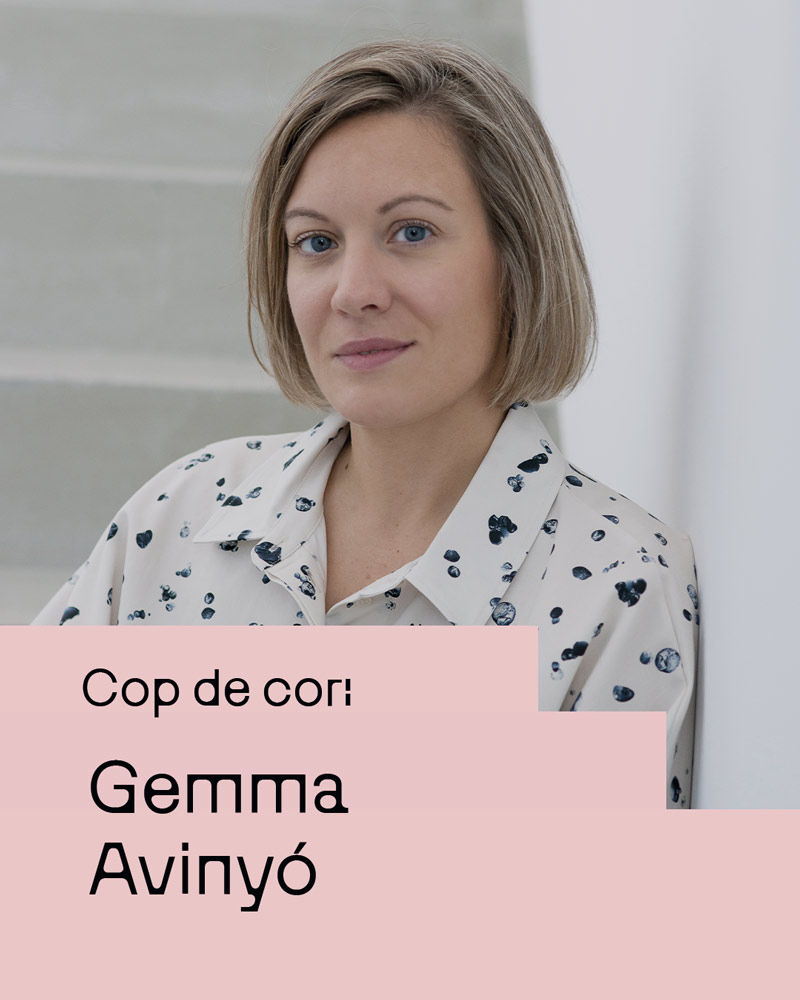
Cop de cor: Gemma Avinyó, cultural manager and deputy director of Fundació Sorigué
Eulàlia Valldosera and Lúa Coderch at àngels barcelona. Although not conceived as such, the dialogue that emerges between these two Catalan artists from different generations is particularly compelling. Working through distinct artistic languages, we will probably find unexpected affinities in their practices. It will certainly be worth visiting the gallery during the days of the Flash programme.
Palmadotze’s pop-up in Barcelona with Miralda. I think everyone should get to know FoodCultura and visit its research space dedicated to the cultural, political and symbolic dimensions of food. Miralda is a pioneer and a key figure in bringing together art and gastronomy, anticipating —and continuing to explore— reflections that remain relevant today.
Lucía C. Pino at Prats Nogueras Blanchard. A great opportunity to see this artist’s recent work in Barcelona, following her outstanding exhibition at CA2M earlier this year. I’m particularly drawn to her approach to sculptural materials and her reinterpretation of the photographic medium. In her work, image, object and matter enter into a compelling relationship of tension.
ethall — Sergio Prego and Eulàlia Rovira share an interest in the relationship between the artwork and the architectural space, a subject that particularly interests me. I’m also intrigued by the dialogue established between the works of Juande Jarillo and Martín Vitaliti, whose practices stem from very different artistic languages and approaches to reality.
Amparo Tormo at Zielinksy. A wonderful opportunity to discover the work of this Valencian artist in Barcelona —I only came across her practice recently myself. Whether in her iron sculptures, her rigorous wooden volumes and her drawings on paper, her work is marked by austerity and strength. An artist well worth knowing.
FUGA with Gabriel Ventura, who works through poetry as a space from which to reflect on the imaginaries of the present. I’m familiar with his writing and have followed his work as a curator, which is why I’m especially interested in seeing how his practice is translated into exhibition form.
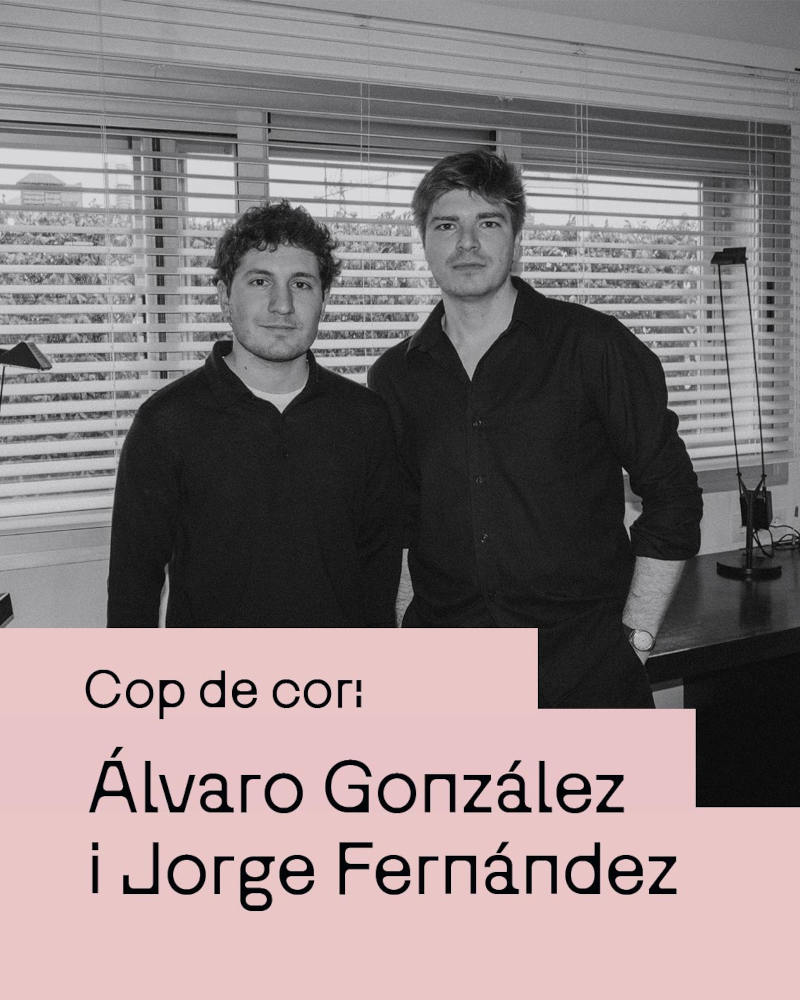
Cop de cor: Álvaro González Cerezo and Jorge Fernández Gómez, architects and collectors
Bombon Projects: Mounira Al Solh, an artist we have yet to get to know, but whose work strikes us as fresh and bold. It’s always a pleasure to discover new projects through Bombon.
Chiquita Room: Pieter Laurens Mol’s exhibition as part of the Flash programme. We’re curious to see which works he’ll surprise us with —and, no doubt, amuse us with— this time.
ethall: one of the galleries that consistently captivates us. This edition brings together three proposals that resonate strongly with our architectural sensibility: from Eulàlia Rovira’s multifaceted practice to the dialogue between Jarillo and Vitaliti, and Sergio Prego’s constructions.
Prats Nogueras Blanchard: Lucía C. Pino’s exhibition, which also draws us in almost inevitably from an architectural perspective (construction, space, materiality…)
ProjecteSD: we’re looking forward to the dialogue between the works of Ana Jotta and Allen Ruppersberg. The title alone, The Game of the Goose, already invites us to enjoy what is sure to be an intellectually and visually rewarding experience.